Green Grounds Directory
Explore campuses leading the way in organic, pesticide-free land care.
Meet the campuses leading the way.
Platinum Campuses
Hampshire College
Point of contact: James Sanner, Assistant Director of Grounds and Land Management
Percent of campus managed without synthetic pesticides and fertilizers: 99%
Level of certification: Platinum
What impresses us: Hampshire College manages all 815 acres of its campus without synthetic pesticides or fertilizers and has established more than 35 acres of wildflower meadows and native habitat projects. The campus also engages students through its farm, research initiatives, and hands-on stewardship opportunities, using the landscape as a living laboratory.
Plan for improvement: Hampshire plans to continue strengthening soil health through biologically active compost, overseeding, and aerification while expanding native plantings that reduce maintenance needs and support pollinators and wildlife.
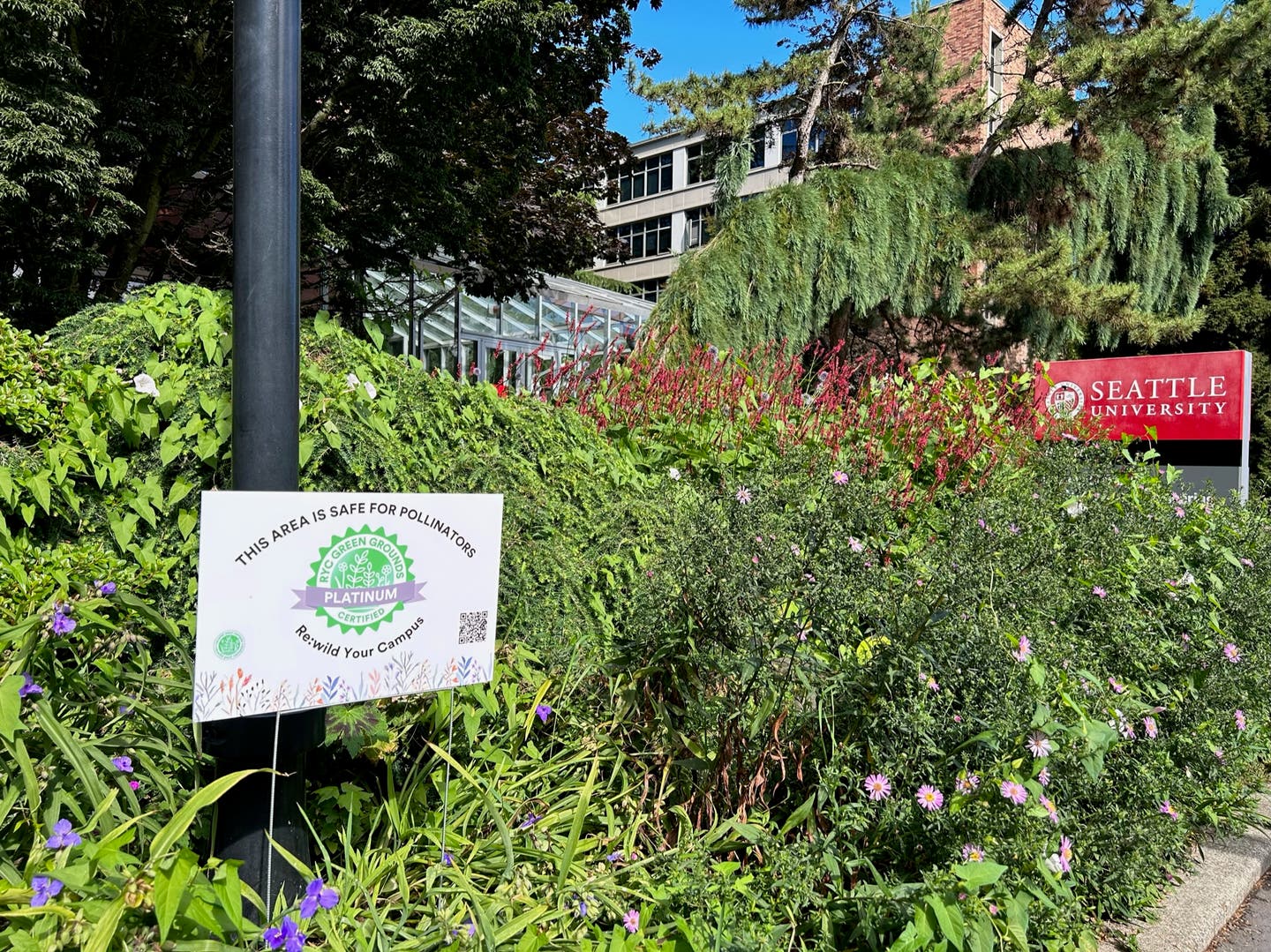
Seattle University
Point of contact: Shannon Britton, Assistant Director Grounds and Waste Management
Percent of campus managed without synthetic pesticides and fertilizers: 100%
Level of certification: Platinum
What impresses us: The entire campus has been fully organic and synthetic pesticide and herbicide free since 1986.
Plan for improvement: Seattle University plans on exploring organic fertilizer options for sports fields which occasionally require a synthetic fertilizer in cool seasons.
University of Washington Bothell
Point of contact: Tyson Kemper, Grounds Supervisor of University of Washington, Bothell and Cascadia College
Percent of campus managed without synthetic pesticides and fertilizers: 100%
Level of certification: Platinum
What impresses us: Cascadia College and UW Bothell created a Food Forest. With over 30 fruit trees, it is a living laboratory and provides healthy food for the community.
Plan for improvement: Cascadia College and UW Bothell would like to expand their no mow areas to include all of the campus lawns.
Cascadia College
Point of contact: Tyson Kemper, Grounds Supervisor of University of Washington, Bothell and Cascadia College
Percent of campus managed without synthetic pesticides and fertilizers: 100%
Level of certification: Platinum
What impresses us: Cascadia College and UW Bothell created a Food Forest. With over 30 fruit trees, it is a living laboratory and provides healthy food for the community.
Plan for improvement: Cascadia College and UW Bothell would like to expand their no mow areas to include all of the campus lawns.
UT Austin Dell Medical School
Point of contact: Justin Hayes, Landscape Supervisor
Percent of campus managed without synthetic pesticides: 100%
Level of certification: Platinum
What impresses us: The Dell Medical School integrates native species into the landscape and uses compost and compost teas to increase soil water retention. The campus has a 27,000 gallon cistern that collects water from their 20,000 sq ft rooftop garden and feeds the sprinkler system.
Plan for improvement: The school is working to increase the presence of native species on campus with a goal of cultivating a campus that has little to no invasive species or non-native plants.
Prescott College
Point of contact: Zachary Czuprynski, Sustainability Coordinator
Percent of campus managed without synthetic pesticides: 100%
Level of certification: Platinum
What impresses us: Prescott College has been pesticide-free for over a decade. Their current landscaping practices prevent pests effectively, such as mulching with their own woodchips, sealing buildings properly, minimizing pest attractants, employing Best-Management Practices for their composting systems, and sealing any water leaks quickly.
Plan for improvement: Prescott College will continue to strive to keep a "wild" landscape that reflects native species and provides habitat for all critters.
Gold Campuses
University of California, Berkeley
Point of contact: Danner Doud-Martin, Director of Haas Campus Sustainability
Percent of campus managed without synthetic pesticides and fertilizers: 95%
Level of certification: Gold
What impresses us: UC Berkeley has transitioned over 1,171 acres of campus to organic management, prioritizing soil health, native plants, and biodiversity. Student engagement is central, with pollinator gardens, habitat restoration, and seed-sharing programs creating a living classroom for sustainability.
Plan for improvement: UC Berkeley plans to further reduce synthetic inputs on the remaining 61 acres managed with IPM practices and explore organic fertilizer alternatives for sports fields.
University of Massachusetts Amherst
Point of contact: Pamela Monn, Associate Director of Grounds and Events
Percent of campus managed without synthetic pesticides and fertilizers: 91%
Level of certification: Gold
What impresses us: UMass Amherst is home to over 800 acres of natural lands which are managed without synthetic inputs. The school also grows 80% of what is planted on campus in their greenhouse.
Plan for improvement: UMass Amherst is making a concerted effort to reduce annual plants, which are popular in landscape design, by replacing them with woody, perennial plant material in many of the beds on campus.
Hillfield Strathallan College
Point of contact: Jonas Hall, Lead Grounds
Percent of campus managed without synthetic pesticides and fertilizers: 90% (100% pesticide-free)
Level of certification: Gold (applying for Platinum)
What impresses us: HSC’s 46-acre campus integrates organic land care with student engagement, featuring native plant prairies, mini-forests, and biodiversity-focused projects. Students participate in planting, seed collection, and sustainability events, while the grounds team maintains composting, mulching, and ecological practices year-round.
Plan for improvement: HSC aims to transition all synthetic fertilizer use to fully organic management, expand native plantings, reduce lawn areas, and implement electric and autonomous landscaping equipment to reduce carbon emissions and labor needs.
University of California Los Angeles
Point of contact: Nurit Katz, Chief Sustainability Officer
Percent of campus managed without synthetic pesticides and fertilizers: 95%
Level of certification: Gold
What impresses us: UCLA began converting turf to native and drought tolerant plants over a decade ago, with recent projects focusing more on native plants aligned with the plant palette in UCLA’s Landscape Plan. In a recent conversion project, over 30,000 square feet of turf has been converted to CA native drought tolerant plants. These projects were completed without the use of any pesticides.
Plan for improvement: UCLA will continue to transition more turf spaces to native plants.
St. Edward's University
Point of contact: Roy Johnson, Arborist & Sustainability Coordinator
Percent of campus managed without synthetic pesticides and fertilizers: 93%
Level of certification: Gold
What impresses us: St. Edward's University is home to 13 acres of dedicated wildflower areas around the campus and has transitioned away from synthetic fertilizer inputs.
Plan for improvement: St. Edward's is continuing to expand native planting areas and is working to eliminate non-native species.
Silver Campuses
Harvard University
Point of contact: Jason MacKay, Landscape Manager
Percent of campus managed without synthetic pesticides and fertilizers: 70%
Level of certification: Silver
What impresses us: Harvard University Central Campus demonstrates a strong commitment to reducing synthetic inputs across a large and complex landscape. Their approach prioritizes native plant integration in rain gardens, bioswales, and pollinator spaces, alongside thoughtful soil-building practices like compost tea, aeration, and overseeding. The campus has also significantly invested in electrifying its grounds equipment fleet, with a clear path toward 100% battery-powered operations. Their engagement with students through landscape projects and sustainability dialogue further reinforces a culture of ecological stewardship.
Plan for improvement: While synthetic pesticides are already used sparingly and as a last resort, continued efforts to transition tree care and athletic field management toward fully organic alternatives will be key. Expanding pesticide-free management beyond 70% and further reducing reliance on synthetic treatments for tree health will support progress toward higher certification levels.
Drexel University
Point of contact: Scott Dunham, Director of Grounds
Percent of campus managed without synthetic pesticides and fertilizers: 71%
Level of certification: Silver
What impresses us: Drexel University has stopped using pre-emergent products and has adopted an organic model including the fertilizers we use.
Plan for improvement: Drexel will continue their current plan to soil test, adjust organic fertilizer rates and amendments, and aerate/overseed twice per year to promote thicker and healthier turf.
Bronze Campuses
University of Northern Iowa
Point of contact: Jonathan Butler, Assistant Director, Campus Services
Percent of campus managed without synthetic pesticides: 60%
Level of certification: Bronze
What impresses us: University of Northern Iowa is home to many native prairie grass restoration sites that foster local biodiversity.
Plan for improvement: There is a significant desire to pilot a number of different organic management practices on campus with an end goal of implementation on a larger scale, which is why UNI is enrolling in our organic pilot program.
University of Maryland Baltimore County (UMBC)
Point of contact: Nicole Wolf, Environmental Sustainability Coordinator
Percent of campus managed without synthetic pesticides: 62%
Level of certification: Bronze
What impresses us: UMBC has established a Landscape Stewardship Committee, which is responsible for reviewing and advising on landscape projects and practices, with a focus on promoting ecological health and eliminating synthetic pesticide use.
Plan for improvement: UMBC's Campus Landscape Master Plan sets out ways that the school will prioritize practices that promote ecological health and eliminate the use of synthetic pesticides, including implementing an IPM program, encouraging biodiversity, promoting healthy soil, using organic fertilizers, and engaging the campus community.
Non Academic Campuses
Hungerford Nature Center
Point of contact: Tami Christopher, Executive Director (secondary: Emily Carreiro)
Percent of campus managed without synthetic pesticides and fertilizers: 100%
Level of certification: Platinum
What impresses us: Hungerford Nature Center maintains all 22 acres without synthetic pesticides or fertilizers and is deeply committed to ecological stewardship—rewilding lawn areas into meadows, replacing non-native ornamentals with native species, and using goats and manual methods to manage invasives.
Plan for improvement: Hungerford plans to further increase native habitat by removing remaining non-native plantings, reducing high-maintenance landscaped areas, and implementing sustainable equipment procurement outlined in their strategic plan.
Amber Waves Farm
Point of contact: Zoe Cronin, Farmer & Public Spaces Manager
Percent of campus managed without synthetic pesticides and fertilizers: 100%
Level of certification: Platinum
What impresses us: Amber Waves Farm manages all 2 acres without any synthetic pesticides or fertilizers, relying entirely on ecological, hand-scale approaches. Their commitment to native plants is robust—planting native species along fence lines, adding natives to the Education Garden, and partnering with the Perfect Earth Project to install a native pollinator garden that welcomes visitors into their public space.
Plan for improvement: Amber Waves Farm plans to continue increasing native plantings, expand mulching with composted leaves and wood chips to build soil health, and prioritize perennial native species that reduce irrigation needs, support pollinators, and lower long-term maintenance demands.
Natural History Museum of Los Angeles County
Point of contact: Daniel Feldman, Senior Manager, Horticulture
Percent of campus managed without synthetic pesticides and fertilizers: 90%
Level of certification: Gold
What impresses us: The Natural History Museum of Los Angeles County manages its gardens organically, prioritizing native and drought-tolerant plants, on-site composting, and OMRI-certified inputs. Their grounds double as living classrooms, using interpretive signage, tours, and public programming to educate visitors about native plants, pollinator health, and sustainable land care.
Plan for improvement: While the Museum already avoids pesticide use on its grounds, it is working with neighboring landscape contractors at Exposition Park to eliminate herbicide use on or adjacent to Museum property, further strengthening protections for soil health, pollinators, and wildlife.
Grant Park (Chicago Park District)
Point of contact: Cathy Breitenbach, Director of Cultural and Natural Resources
Percent of campus managed without synthetic pesticides and fertilizers: 65%
Level of certification: Bronze
What impresses us: Grant Park is part of the Chicago Park District’s robust natural areas program, which manages nearly 2,000 acres of parkland as biodiverse natural areas that prioritize wildlife habitat, ecological health, and environmental education.
Plan for improvement: While pesticide use is already limited and lawn care is chemical-free, the Park District plans to continue minimizing targeted pesticide applications and expanding natural area management practices that reduce long-term chemical dependence.